Modern motoring demands sophisticated solutions to challenges that have plagued drivers since the earliest days of the automobile. Among these innovations, the viscous coupling stands out as an elegant response to the problem of maintaining traction across varying road surfaces and driving conditions. This clever piece of automotive engineering has quietly revolutionised the way all-wheel-drive systems manage torque distribution, offering a seamless and automatic solution that requires no input from the driver. By harnessing the properties of specialised fluids and precise mechanical design, viscous couplings have become integral to the drivetrain architecture of countless vehicles traversing Britain's roads today.
The fundamental principles behind viscous coupling technology
Understanding the silicone fluid mechanics within the coupling unit
At its core, the viscous coupling operates on principles remarkably similar to those employed by the torque converter found in automatic transmissions. The system consists of two sets of plates housed within a sealed container filled with a thick, viscous fluid. This fluid is typically a silicone-based compound chosen for its unique thermal and mechanical properties. When wheels maintain similar speeds during normal driving conditions, these plates rotate in near unison, and the fluid between them remains relatively undisturbed. The torque transfer during such moments is minimal, allowing the vehicle to corner smoothly without the binding or resistance that could otherwise occur. The beauty of this arrangement lies in its passive nature; unlike electronic or mechanically actuated systems, the viscous coupling responds automatically to changes in wheel speed variation without requiring sensors, computers, or driver intervention.
The silicone fluid within the coupling serves a dual purpose in the powertrain. Firstly, it acts as the medium through which mechanical energy is transferred between the rotating plates. Secondly, its viscosity changes predictably with temperature, making it an ideal substance for managing the torque distribution characteristics of the system. When one wheel begins to slip on a low-grip surface such as ice or mud, the speed difference between the plates increases dramatically. This differential rotation causes the fluid to heat up through a process known as shear heating. As the temperature rises, the fluid's resistance to flow increases, effectively thickening and creating a stronger mechanical link between the faster and slower rotating components. This phenomenon enables the coupling to transfer torque to the wheel with better grip, thereby improving traction without any conscious input from the driver.
The role of temperature and shear forces in torque transfer
Temperature plays a pivotal role in how effectively a viscous coupling can redistribute torque within the drivetrain. When tyre slip occurs, the rapid rotation of the friction discs relative to one another generates substantial heat within the sealed housing. This thermal energy directly influences the viscosity of the fluid, transforming it from a relatively free-flowing medium into a thicker, more adhesive substance. The increased viscosity means that the shear forces acting on the slower-moving plates intensify, effectively dragging them up to speed and transferring torque away from the slipping wheel towards the axle shaft connected to the wheel with superior grip. This process happens almost instantaneously, providing a smooth and progressive response that drivers often fail to notice but certainly appreciate when navigating challenging conditions.
The relationship between shear forces and torque transfer is fundamental to understanding why viscous couplings have proven so successful in all-wheel-drive applications. When a vehicle encounters a situation where one axle begins to lose traction, the differential housing continues to rotate, but the speed difference between the front and rear outputs increases. Within the viscous coupling, this speed variation translates into rapid relative motion between the interleaved plates. The shear forces generated within the viscous fluid create friction that resists this relative motion, effectively coupling the two outputs together more firmly. This means that torque is progressively redirected to whichever wheels maintain contact with the road surface, thereby maximising the vehicle's ability to maintain forward momentum. Unlike traditional limited-slip differential designs that rely on mechanical preload or clutch packs, the viscous coupling achieves this without the harshness or abruptness that can characterise other systems.
Construction and Components of a Viscous Coupling System
Internal disc arrangement and sealed housing design
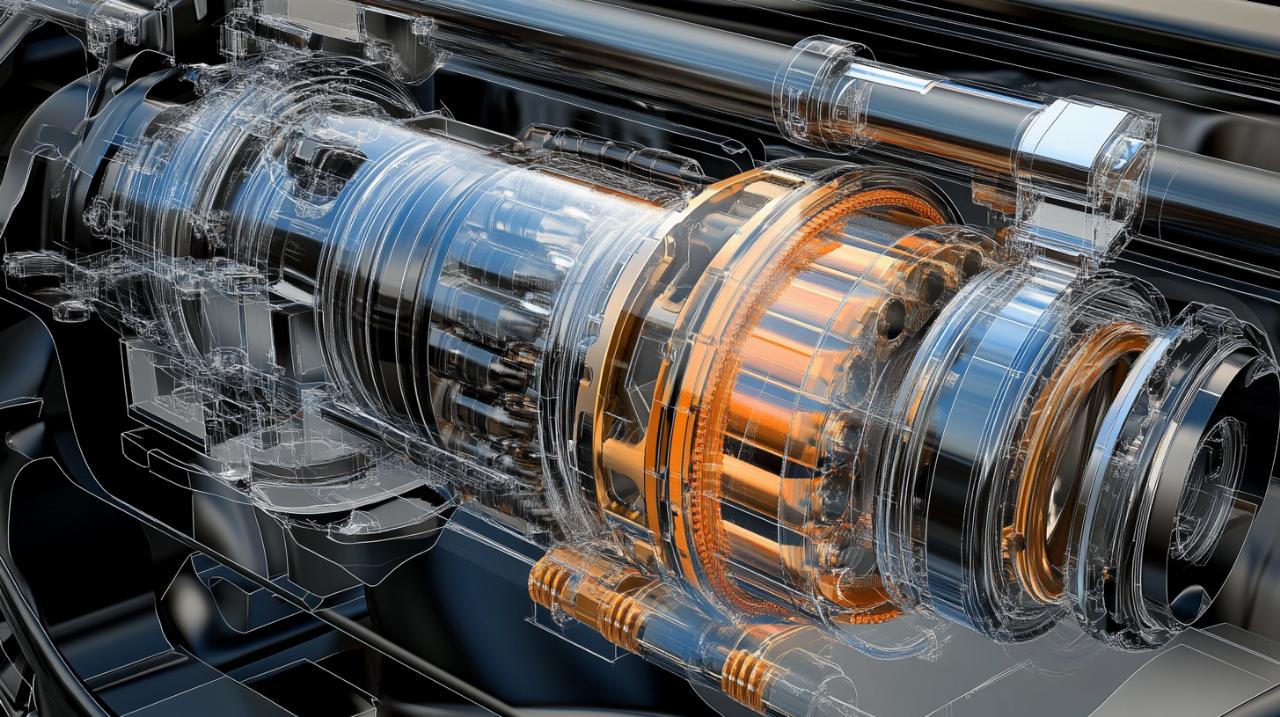
The construction of a viscous coupling is a study in precision engineering and material science. Within the sealed differential case, multiple friction discs are arranged in an alternating pattern, with one set connected to the input shaft and the other to the output. These discs are typically made from steel or similar materials chosen for their durability and resistance to the high temperatures generated during operation. The spaces between the discs are carefully calculated to allow the viscous fluid to flow freely during normal driving whilst ensuring sufficient surface area for effective torque transfer when slip occurs. The sealed housing itself must be robust enough to withstand the pressures and temperatures generated during aggressive driving or prolonged slip conditions, yet it must also prevent any leakage of the specialised fluid, which would compromise the system's effectiveness.
Sealing integrity is paramount in viscous coupling design. Any breach in the housing can allow the silicone fluid to escape or permit contaminants to enter, both of which would degrade performance and ultimately lead to failure. Manufacturers employ advanced sealing techniques, often utilising multiple layers of gaskets and O-rings to ensure long-term reliability. The ring gear, pinion, and spider gear components that surround the viscous coupling must also be precisely machined to ensure smooth power delivery and minimal wear. The pinion shaft, which holds the spider gears in place, plays a critical role in distributing torque from the transmission through to the drive gear and subsequently to the axle shafts. Every component within this assembly must work in harmony, as any misalignment or excessive wear can result in reduced efficiency or even catastrophic failure of the drivetrain.
Integration with cooling fans and all-wheel drive systems
Beyond their role in managing torque distribution between axles, viscous couplings have found another crucial application within the powertrain of many vehicles: controlling engine cooling fans. In this context, the viscous coupling is mounted between the engine's drive pulley and the cooling fan itself. During normal operation, when the engine is running cool, the coupling allows the fan to rotate at a reduced speed, minimising parasitic drag on the engine and improving fuel efficiency. However, as engine temperature rises, the viscous fluid within the coupling heats up and thickens, causing the fan to spin faster and draw more air through the radiator. This elegant solution provides efficient cooling without the complexity of electric motors or electronic controls, though it does require the fluid to remain in good condition to function correctly.
In all-wheel-drive systems, the integration of viscous couplings has enabled manufacturers to offer vehicles that seamlessly transition between two-wheel and four-wheel drive without driver intervention. By placing the coupling between the front and rear axles, engineers have created systems that remain in a predominantly two-wheel-drive configuration during normal motoring, thereby conserving fuel. When wheel slip is detected through the natural operation of the coupling, torque is progressively transferred to the opposite axle, engaging all-wheel drive automatically. This approach has proven particularly popular in crossover vehicles and SUVs, where full-time four-wheel drive would be excessive for most driving conditions, yet the capability to engage additional traction on demand is highly valued. The multi-plate clutch arrangement within the coupling allows for a wide range of torque distribution characteristics, which can be tuned during the design process to suit the intended character of the vehicle.
Common Faults and Performance Issues in Viscous Couplings
Symptoms of silicone fluid degradation and seal failure
Despite their reliability and longevity, viscous couplings are not immune to wear and deterioration over time. One of the most common issues encountered is the degradation of the silicone fluid itself. Through repeated heating and cooling cycles, the fluid can break down chemically, losing its ability to change viscosity in response to temperature variations. When this occurs, the coupling's ability to transfer torque effectively is compromised. Drivers may notice symptoms such as increased tyre slip during acceleration, difficulty maintaining traction in wet or icy conditions, or unusual noises emanating from the differential housing. In vehicles where the viscous coupling controls the cooling fan, fluid degradation might manifest as engine overheating or a constantly engaged fan that creates excessive noise and reduces fuel economy.
Seal failure represents another significant concern for viscous coupling longevity. The high pressures and temperatures generated within the unit place considerable stress on the seals and gaskets that keep the silicone fluid contained. Over time, these seals can harden, crack, or simply wear out, allowing the fluid to leak from the housing. Once fluid begins to escape, the coupling's performance deteriorates rapidly. External signs of seal failure include visible fluid leakage around the differential case or coupling housing, often accompanied by a distinctive smell as the silicone burns off on hot components. Internal contamination can also occur if a seal fails inward, allowing gear oil or other fluids to mix with the viscous fluid, further degrading its properties and reducing the effectiveness of the entire drivetrain.
Diagnostic techniques and replacement considerations for vehicle owners
Diagnosing issues with a viscous coupling requires a methodical approach and an understanding of how the system should behave under normal conditions. Technicians often begin by assessing the vehicle's behaviour during test drives, noting any unusual handling characteristics, traction problems, or noise. For couplings used in all-wheel-drive systems, a common diagnostic procedure involves raising the vehicle on a lift and attempting to rotate one wheel whilst observing the behaviour of the others. In a properly functioning system, resistance should be felt as the coupling transfers torque. If the wheels spin freely with no resistance, the coupling has likely lost its effectiveness due to fluid degradation or mechanical failure. For cooling fan applications, observing the fan's engagement characteristics at various engine temperatures can reveal whether the coupling is functioning correctly.
When replacement becomes necessary, vehicle owners face several considerations. The cost of replacing a viscous coupling can vary considerably depending on the vehicle model and the coupling's location within the drivetrain. According to industry estimates, differential-related repairs generally range between two hundred and four hundred pounds, though this can increase significantly if additional components such as the ring gear, pinion, or axle shafts require attention. Given the sealed nature of most viscous couplings, repair is typically not an option; the entire unit must be replaced. It is worth noting that preventative maintenance of the surrounding drivetrain components can extend the coupling's service life. Ensuring that gear oil is changed at recommended intervals, maintaining proper fluid levels, and addressing any transmission issues promptly can all help to reduce the stress placed on the viscous coupling. For those experiencing symptoms of coupling failure, prompt attention is advisable, as continued operation with a faulty unit can lead to more extensive and costly damage to other powertrain components.
The viscous coupling represents a triumph of elegant engineering, solving complex problems of torque distribution and traction management with a remarkably simple mechanical solution. Its widespread adoption across various vehicle types and applications attests to its effectiveness and reliability. Understanding how this technology functions and recognising the signs of potential failure empowers vehicle owners to maintain their cars properly and address issues before they escalate. As automotive engineering continues to evolve, the fundamental principles demonstrated by the viscous coupling remain relevant, influencing the development of ever more sophisticated traction and power management systems.